

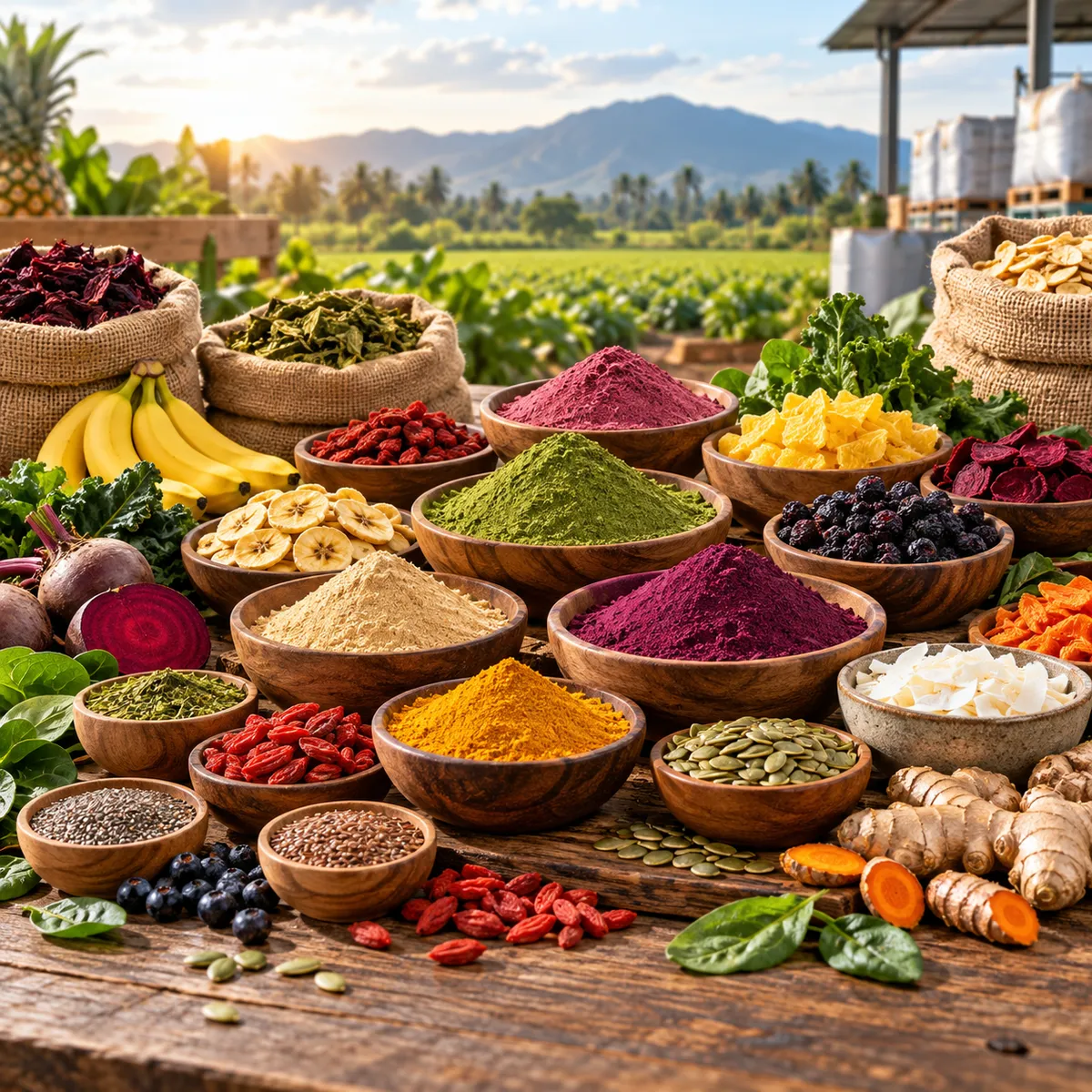
Bulk Superfood Powders: A Sourcing Guide for Food Manufacturers
Superfood powders have become an ingredient category of interest to food manufacturers, nutrition brands and businesses developing plant-based products. They offer a convenient format for incorporating selected fruits, vegetables and other plant-derived ingredients into different formulations.
For businesses buying ingredients in commercial quantities, however, sourcing the right product involves more than comparing prices. Product specifications, consistency, packaging, documentation and supply capacity all play a role in selecting a suitable supplier.
Whether you are developing a powdered drink, a functional food blend or a private-label product, understanding the sourcing process can help you make better purchasing decisions.
What Are Superfood Powders?
Superfood powders are powdered ingredients made from selected plant materials, fruits, vegetables or other food ingredients. Depending on the product, they may be used in beverages, food blends, nutritional formulations and other applications.
The term "superfood" is broad and does not represent a single regulated product category. Buyers should therefore assess each ingredient individually rather than assuming that all superfood powders have the same composition, nutritional profile or intended use.
For commercial sourcing, it is important to identify the exact ingredient, its processing method and the specifications required for the finished product.
Types of Superfood Ingredients Used in Manufacturing
Food and nutrition businesses may source different plant-based powders depending on their formulations and target customers.
Common ingredient categories to investigate include:
Fruit powders
Vegetable powders
Leaf powders
Root powders
Dried botanical ingredients
Plant-based food ingredients
The availability and suitability of individual ingredients depend on the supplier's product range and the intended application.
Before requesting a quotation, buyers should establish the ingredient name, required form, particle size where applicable, quantity and any relevant quality parameters.
Why Food Manufacturers Buy Ingredients in Bulk
Bulk purchasing can help manufacturers coordinate procurement for regular production runs. It may also make it easier to plan inventory and establish supply arrangements for products with recurring ingredient requirements.
However, the appropriate order quantity depends on production volume, storage capacity, shelf-life considerations and expected demand.
Businesses should compare the total commercial cost, including packaging, transportation, storage and any testing requirements, rather than looking at the quoted price per kilogram alone.
How to Choose a Bulk Superfood Powder Supplier
Finding a suitable bulk superfood powder supplier requires a clear understanding of your product requirements.
1. Confirm the Product Specification
Ask for the product specification before placing an order. Depending on the ingredient, relevant parameters may include identity, particle size, moisture, colour, microbiological criteria and other agreed quality requirements.
Make sure the specification matches the intended manufacturing application.
2. Review Quality Documentation
Request the relevant technical documents and quality records available for the product. Depending on the ingredient and destination market, these may include a specification sheet, certificate of analysis or other supporting documentation.
Check that the documents relate to the actual product being offered and cover the requirements relevant to your business.
3. Discuss Packaging Options
Packaging requirements depend on the ingredient, order size, transportation method and storage conditions.
Ask about available pack sizes, packaging materials, labelling and storage recommendations. For export orders, confirm that the proposed packaging is appropriate for the shipment and destination.
4. Check Supply Capacity
If your business expects to place repeat orders, discuss expected quantities, lead times and supply planning with the supplier.
A clear understanding of these details can help you assess whether the supplier is suitable for your purchasing schedule.
5. Verify Applicable Certifications
Certification requirements vary according to the product, intended use and destination market.
Ask which certifications and registrations apply to the specific product and operation, and verify their validity and scope. Do not assume that a certification automatically covers every ingredient supplied by a company.
Superfood Powder Suppliers for Private-Label Brands
Private-label businesses often need to coordinate ingredient sourcing with product development, packaging and manufacturing.
If you are developing a private-label food or nutrition product, clarify whether you need only a bulk ingredient supplier or a separate manufacturer capable of producing and packing the finished product under your brand.
These are different requirements. A supplier of bulk ingredients may not provide finished-product formulation, packaging design or private-label manufacturing.
Confirm the available services before making commercial commitments.
Sourcing Superfood Ingredients From India
India has a diverse agricultural base and a range of suppliers working with plant-derived food ingredients. Businesses sourcing from India can compare suppliers based on the ingredient range, product specifications, quality procedures, commercial quantities and export capabilities.
For international buyers, it is also important to clarify shipping arrangements, export documentation and destination-country requirements before confirming an order.
A well-defined purchasing brief helps suppliers provide more relevant quotations and reduces uncertainty during the sourcing process.
Damodarr Global: Natural and Plant-Based Ingredients
Damodarr Global supplies natural and plant-based ingredients for B2B customers, including dried herbs, botanical ingredients, superfoods and dehydrated fruits and vegetables.
Businesses interested in sourcing these ingredients from India can explore the company's product range and contact its team to discuss product availability, specifications, quantities and export requirements.
Visit the website: https://damodarr.com/
Buyers should confirm the availability and suitability of each specific ingredient directly with the supplier before placing an order.
Questions to Ask Before Buying Superfood Powders in Bulk
Before finalising a supplier, consider asking the following questions:
What ingredients and product forms are available?
What are the product specifications?
What is the minimum order quantity?
Which quality documents can be provided?
What packaging formats are available?
What is the expected lead time?
Can the supplier support repeat orders?
Which export and shipping arrangements are available?
Comparing suppliers against the same requirements makes it easier to assess quotations and identify the most appropriate option for your business.
Conclusion
Sourcing bulk superfood powders requires careful consideration of product specifications, quality documentation, packaging, supply capacity and intended application.
For food manufacturers, distributors and private-label businesses, the right supplier is one that can meet the agreed requirements and communicate clearly about availability, quality and commercial terms.
If you are sourcing superfood powders or other plant-based ingredients from India, start by defining your product requirements and comparing suppliers against those specifications. This creates a more practical foundation for a reliable ingredient supply relationship.