
Dehydrated Fruits and Vegetables: A Practical Guide for Food Manufacturers
Food manufacturers often need ingredients that are easy to store, handle and incorporate into different recipes. Dehydrated fruits and vegetables can be useful in this regard because removing moisture creates a convenient ingredient format while allowing the produce to be used in a wide range of food applications.
From soups and sauces to seasoning mixes and ready-to-eat foods, dehydrated produce is used by manufacturers that need consistent ingredients in commercial quantities.
What Are Dehydrated Fruits and Vegetables?
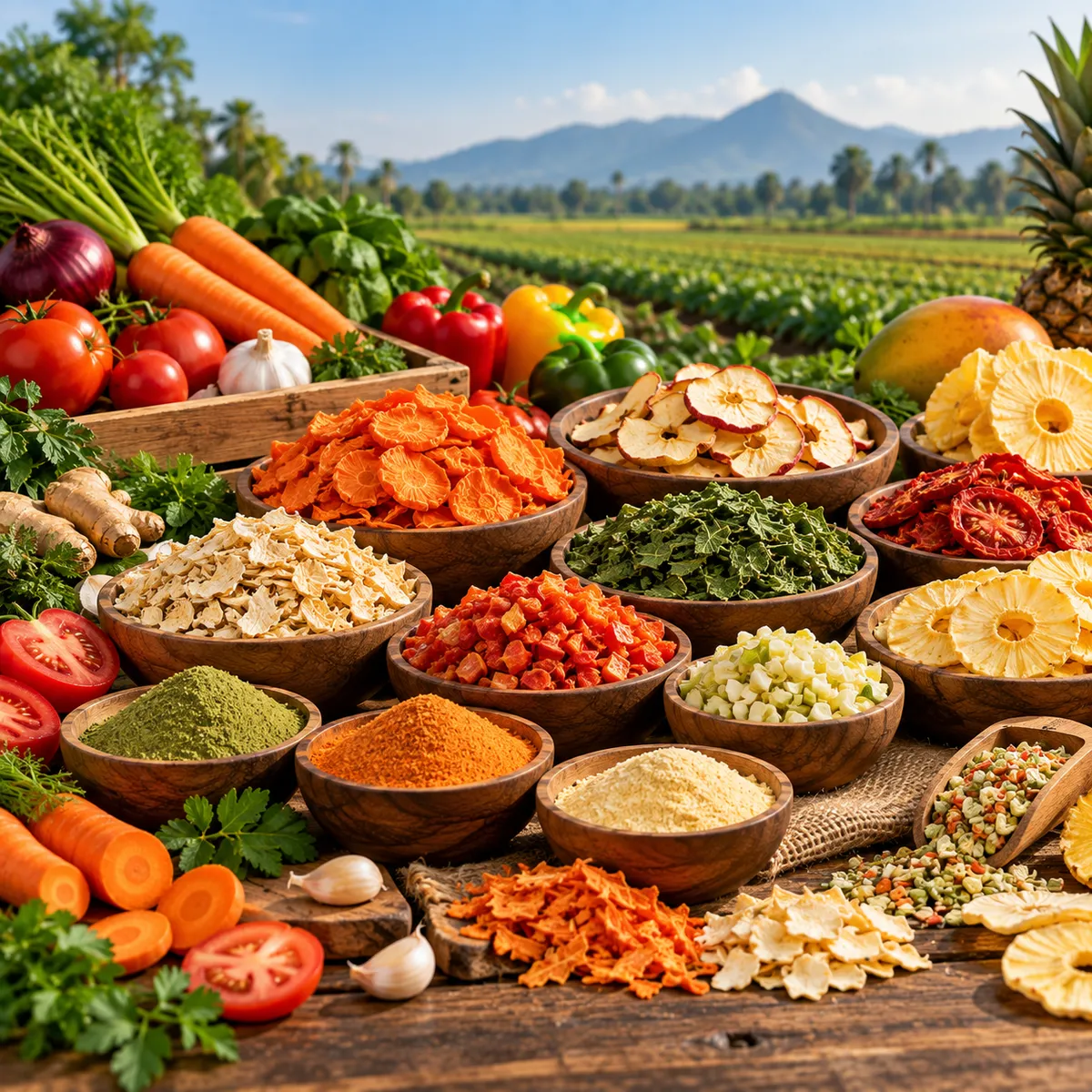
Dehydration is a process in which moisture is removed from fruits or vegetables under controlled conditions. The resulting ingredient can be supplied in different sizes and forms depending on its intended use.
Common formats include:
Slices
Flakes
Dices
Granules
Powder
The appropriate format depends largely on the final product and the manufacturing process.
For example, flakes may work well in certain seasoning and food mixes, while powders can be useful when an ingredient needs to be distributed evenly throughout a formulation.
Where Are Dehydrated Ingredients Used?
Dehydrated fruits and vegetables are used across several areas of food production.
Soups and Ready-to-Eat Foods
Dehydrated vegetables can be incorporated into soup mixes, instant meals and ready-to-eat products. Their convenient format can make handling and portioning easier during manufacturing.
Seasoning and Spice Blends
Flakes, powders and granules can be combined with herbs and spices to create seasoning blends for snacks, packaged foods and other products.
Sauces and Food Preparations
Certain dehydrated ingredients can be used as components in sauces, mixes and prepared foods, depending on the required formulation.
Snacks and Specialty Foods
Dehydrated fruits can also be used in snack products, food mixes and other applications where a concentrated dried ingredient is preferred.
Why Do Manufacturers Buy Dehydrated Produce?
For commercial buyers, convenience is one of the main considerations.
Dehydrated ingredients can be easier to handle and store than fresh produce, particularly when manufacturers need ingredients that can be kept as part of their raw-material inventory.
The format also allows buyers to specify the size and form required for their production process.
However, the right ingredient still depends on the application. A manufacturer should consider the required cut, moisture specification, packaging and other product parameters before placing an order.
Choosing the Right Dehydrated Vegetable Supplier
Finding a suitable dehydrated vegetables supplier requires more than comparing prices.
A buyer should first understand the supplier's product specifications and available formats. It is also useful to discuss packaging, quantities, quality documentation and expected delivery schedules.
For larger commercial requirements, buyers may also want to understand the supplier's ability to maintain consistent supply over multiple orders.
What Should Buyers Check Before Ordering?
Before purchasing dehydrated fruits or vegetables, businesses can review several points.
Product Specification
Confirm the exact product, cut, size, grade and other requirements.
Packaging
Discuss the packaging format and quantity suitable for transportation and storage.
Quality Documentation
Request the relevant product specifications and documentation needed for the intended market.
Supply Capacity
For recurring production, confirm whether the supplier can support the required quantities on an ongoing basis.
Export Capability
International buyers should also consider documentation, shipping arrangements and the supplier's experience with export orders.
Sourcing Dehydrated Ingredients From India
India has a large agricultural base and produces a wide variety of fruits and vegetables. This creates opportunities for international buyers looking for processed food ingredients from Indian suppliers.
For importers and distributors, the choice of an Indian dehydrated food ingredients supplier can depend on the product range, specifications, quality systems, packaging and export capabilities offered by the supplier.
A clear discussion of requirements before the first shipment can help both parties establish expectations and avoid unnecessary issues during procurement.
Damodarr Global
Damodarr Global supplies natural and plant-based ingredients for B2B buyers, including dehydrated fruits and vegetables alongside dried herbs, botanical ingredients and superfoods.
The company works with businesses looking for ingredients from India for commercial food and related applications.
For businesses interested in sourcing dehydrated ingredients, you can explore the available products and contact Damodarr Global regarding your requirements.
Building a Reliable Ingredient Supply Chain
For food manufacturers, sourcing is not just about purchasing a single shipment. A dependable supply relationship requires clear specifications, consistent communication and an understanding of the buyer's long-term requirements.
Before entering into a regular supply arrangement, buyers can compare suppliers based on product quality, available formats, packaging, documentation, commercial quantities and export experience.
This approach can help manufacturers establish a more predictable supply chain as their production requirements grow.
Conclusion
Dehydrated fruits and vegetables can serve a wide range of food manufacturing applications, from soups and seasoning mixes to ready-to-eat foods and snacks.
For businesses sourcing these ingredients in bulk, the right supplier should be evaluated on product specifications, quality, packaging, supply capacity and export capabilities rather than price alone.
For international buyers looking for dehydrated food ingredients from India, understanding these factors can make the sourcing process more efficient and help establish a reliable long-term supplier relationship.