
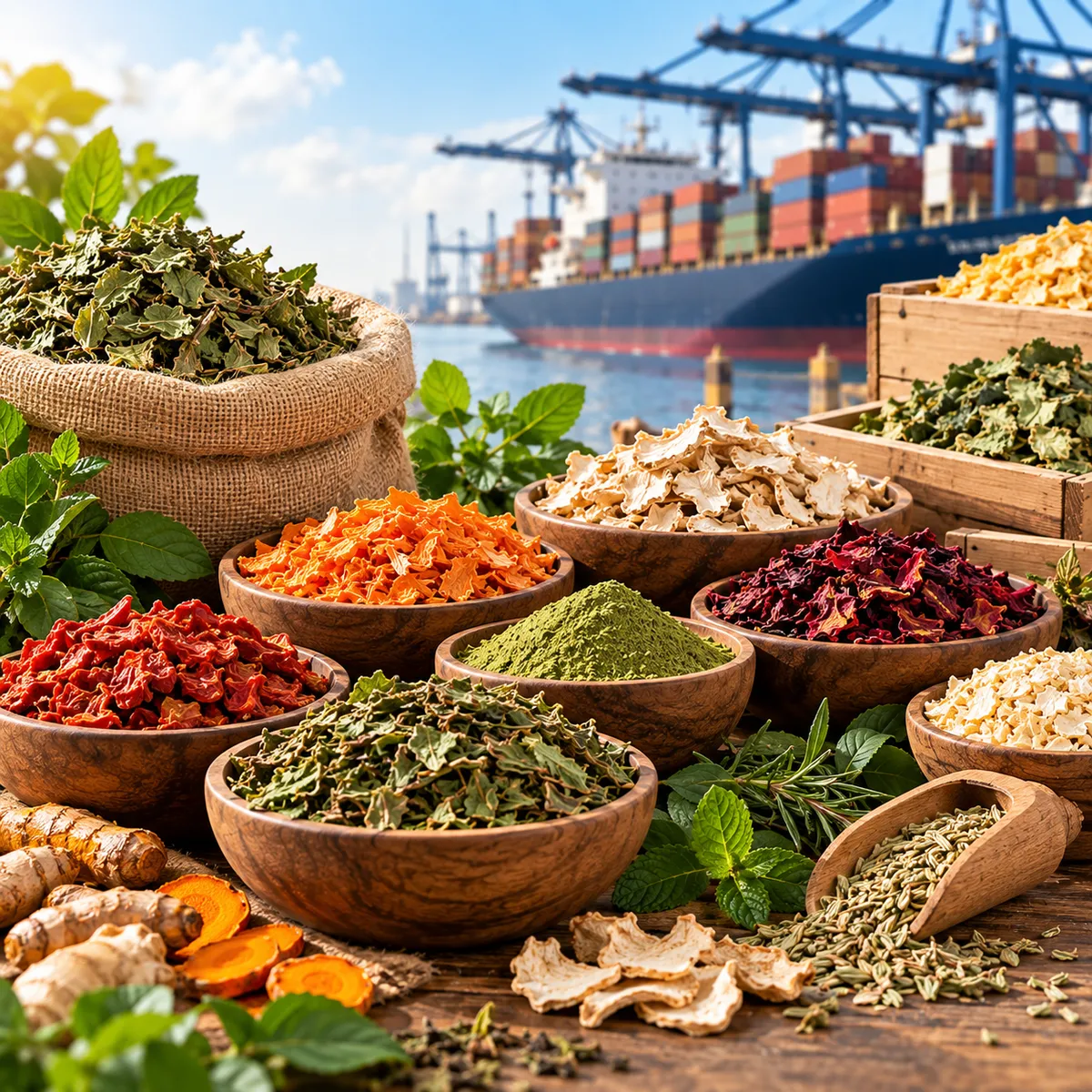
Sourcing natural ingredients for commercial production is not simply a matter of finding the lowest price. For food manufacturers, nutraceutical companies, distributors and private-label businesses, the right supplier needs to provide consistent products, clear specifications and dependable supply.
Dried herbs, botanical ingredients, superfoods and dehydrated fruits and vegetables are used across a wide range of products. When these ingredients are purchased in bulk, even small differences between batches can affect production. That is why supplier selection deserves careful attention.
Understand Your Product Requirement
The first step is to clearly define what you need before contacting a supplier.
A buyer may require a particular herb, botanical ingredient, superfood or dehydrated vegetable in a specific form. Depending on the application, products may be supplied as whole ingredients, slices, flakes, dices, granules or powders.
It is also useful to establish the required quantity, packaging format, product specifications and destination market before requesting a quotation.
Quality Should Be Consistent
For a manufacturer, consistency matters just as much as the initial quality of a product.
A supplier should be able to discuss the characteristics of the ingredient and explain how the product is handled, graded, packed and prepared for shipment. Buyers can also request relevant product documentation and specifications before placing larger orders.
This is particularly important when an ingredient is going into a finished food, beverage or nutraceutical product where the same characteristics are expected from one shipment to the next.
Consider the Supplier's Product Range
Many businesses source more than one type of ingredient. A food manufacturer may need dried herbs for seasoning, dehydrated vegetables for food preparation and botanical or superfood ingredients for another product line.
Working with a supplier that covers several related categories can make procurement easier.
A broad ingredient portfolio may include:
Dried herbs and botanicals
Superfoods and nutraceutical ingredients
Dehydrated fruits
Dehydrated vegetables
Plant-based food ingredients
Herbal raw materials
For buyers managing several product lines, having a common sourcing partner can also simplify communication and order coordination.
Look at Processing and Packaging
The way an ingredient is processed and packed is another important consideration.
Bulk buyers should discuss packaging sizes, protection during transportation and storage requirements with their supplier. Export packaging should also be suitable for the intended shipping method and destination.
Clear packaging specifications at the beginning of the purchasing process can help avoid problems later in the supply chain.
Export Experience Matters
Buying ingredients internationally involves more than the product itself. Documentation, logistics, shipping arrangements and destination-market requirements all form part of the transaction.
An experienced export supplier should understand the practical requirements involved in preparing commercial shipments.
For international buyers, it can therefore be useful to ask about previous export markets, available documentation, shipping terms and the supplier's approach to handling export orders.
Check Certifications and Compliance
Depending on the product and destination, buyers may require specific certifications or registrations.
These requirements can vary by market and by application, so businesses should identify what their own customers and regulators require before placing an order.
Damodarr Global maintains certifications and registrations relevant to its food and export operations. Buyers should review the current certifications and applicable documentation for their specific product and destination requirements.
Why India Is an Important Sourcing Market
India offers a broad range of agricultural and plant-based raw materials, making it an established sourcing market for businesses looking for herbs, botanicals, superfoods and dehydrated produce.
For international buyers, an Indian supplier can be evaluated based on its product range, quality processes, documentation, export capability and ability to meet required commercial specifications.
Damodarr Global
Damodarr Global supplies dried herbs, botanical ingredients, superfoods and dehydrated fruits and vegetables for B2B buyers.
The company focuses on international ingredient sourcing and works with businesses looking for natural and plant-based ingredients from India.
For buyers looking for an Indian supplier of natural and plant-based ingredients, explore the available product categories and contact Damodarr Global for commercial requirements.
What Should Buyers Ask Before Placing an Order?
Before starting a long-term supply relationship, buyers can ask the supplier about:
Product specifications
Available forms and grades
Minimum order quantity
Bulk pricing
Packaging options
Quality documentation
Certifications
Production or supply capacity
Export documentation
Shipping arrangements
Lead time
Having these details confirmed before placing a commercial order can make the procurement process more straightforward.
Conclusion
Choosing a dried herbs or botanical ingredients supplier should be based on more than price. Product consistency, specifications, processing, packaging, documentation and export experience all matter when establishing a reliable supply relationship.
For businesses buying ingredients in commercial quantities, taking the time to compare suppliers before the first large order can help create a more dependable supply chain.